Category: Behind the Scenes

  • A Jigsaw Puzzle: Distribution Options for Indie Films

    A Jigsaw Puzzle: Distribution Options for Indie Films

    As the pandemic stretches on, I’ve noticed friends and family seek out lighter fare on TV and streaming platforms. Friends, How I Met Your Mother, and the like.1 They’re bouncing off prestige2 shows faster than ever. No one wants to see hard narratives. Life is hard enough, and what people are looking for is escapism.

    I briefly mentioned in a previous post that every film faced distribution challenges during the pandemic. Everyone is trying to figure out how to make movies during the lockdown, and then, sell the movies to make enough money so that you can make the next one.

    In an article for Moneycontrol, Indian producers talk about how difficult the lockdown restrictions, even when they are eased, have made productions. Working hours are shorter (night shoots are next to impossible), and all the work needs to be done in a bio-bubble. Everyone working on the film needs to be paid their regular wages, no doubt about that, but it does mean that schedules will run longer if working days are shorter. Night shoots are practically impossible. Bio-bubbles being enforced mean that producers have to bear the cost of accommodation as well.3

    Denis Villeneuve has cast doubt on his Dune duology being completed if WB releases the first part directly to HBO Max. Emily Blunt mentioned in an interview that it’s unlikely that the sequel to Edge of Tomorrow would happen because the budget for a film like that would be too large. It would be unlikely to make its money back.

    Guaranteed blockbusters like Suryavanshi are being held back until theatres reopen. Others are heading straight to streaming services. WB and Disney are experimenting with different release strategies. Tenet was a theatrical release, while Mulan was released to Disney+ with for an additional fee before going free to all subscribers a few months later.

    Right now, Scarlett Johansson and Disney are in a legal suit based on how the release strategy for Black Widow has affected her compensation. Black Widow may have set box office records during the pandemic, but it’s looking to be one of the lowest grossing films in the Marvel Cinematic Universe.

    Streamed films do not generate box office returns and a lot of compensation and production budgets are dependent on them.

    So where does that leave indies?

    This was one of the major points being discussed during Marché du Film. How does independent film survive in an environment where audiences are seeking out comfort fare? Where theatrical releases are not always an option and digital distribution does not favour immediate returns?

    There are a few options available:

    • Waiting to release the film when theatres reopen,
    • Releasing it to streaming services, or
    • Self release and distribution.

    Waiting to release is an option that requires a lot of faith and a lot of money. Not that you have to have a lot of money, but that you have to be okay with having the money tied up with the film until you can release it to theatres. And you limit your options for new projects that you might not have the capital for. I’ll be honest – waiting that long is a terrifying prospect. You’re waiting for theatres to open, for audiences to be ready to tackle challenging cinema, and finally, hoping that the film you’ve created hasn’t missed its moment.

    Streaming services are the option that everyone suggests. Why don’t you release your film on Amazon Prime or Netflix, they ask. What they imagine is selling a film to a streaming platform for a large sum of money. The reality for a lot of indies is far more like putting your film up on YouTube and hoping that someone will watch it.

    Those are not the only options, of course. There are dedicated platforms for any kind of cinema that you can think of. The biggest name in Arthouse Cinema streaming is MUBI, and they run a very tightly curated selection of films.

    But getting a film onto a streaming service is not the easiest option, and brings an ever-present risk of piracy with it. A filmmaker I recently spoke with said that it didn’t matter that his film was available for ₹30 on a streaming platform or on YouTube. People were instead watching it on Telegram channels that were sharing a ripped version of the film.

    And you still have to market your film to any potential viewers – viewers who are spoiled for choice and currently seeking out comfortable content.4

    Speaking of doing your own marketing, there’s the third option: self release and pay-per-view distribution. This is a slow process – because this is where you have to do all the work. Like in the previous option, you have to cast a wide net, getting the attention of viewers around the world who might watch the film, then give them a way to easily watch it, and finally, figure out how to make them pay for the film. It can be a long, slow process.

    I’ve seen filmmakers do this. The one that sticks out in my mind is how Sandeep Mohan got his film Hola Venky in front of audiences. I watched the film at a co-working space where he projected the film from his laptop onto a wall and used the venue’s speakers for sound. At the end, he hosted a Q&A and asked that we contribute what we felt comfortable contributing.

    No matter which option you take, it’s nerve-wracking. It’s also really exciting. It feels like the start of a rollercoaster, where you’re slowly being pulled to the top before going into a dive, or looking at a jigsaw puzzle immediately after you’ve dumped it on a table to start assembling it.


    1. Over in our house, we’re binging Once Upon A Time, Critical Role, and finishing the last season of Madam Secretary

    2. A prestige show is one that’s supposed to be of a higher quality than regular TV. It’s usually a drama and runs on a premium cable channel. Shows like The Sopranos, Breaking Bad, Mad Men, and House of Cards

    3. Malcolm and Marie was filmed last year in a bubble. The first thing that we noticed when we saw how the bubble was maintained was that it would be very expensive for the producers to run a production like that. 

    4. And there’s nothing wrong with that at all. It just makes getting Arthouse films seen harder than it normally is.  

  • Travel, Cash, and Potatoes: Lessons Learned on My First Film

    Travel, Cash, and Potatoes: Lessons Learned on My First Film

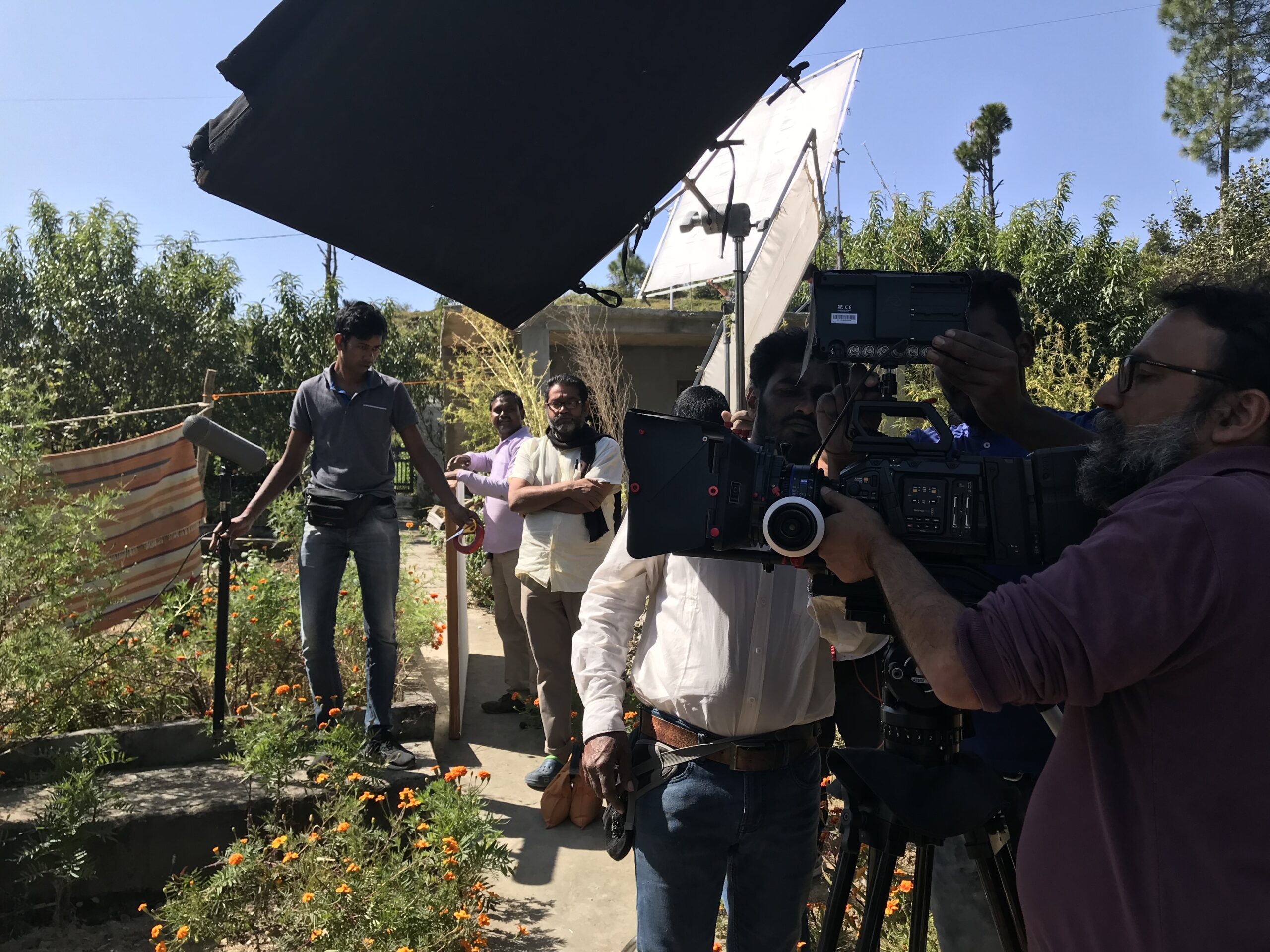
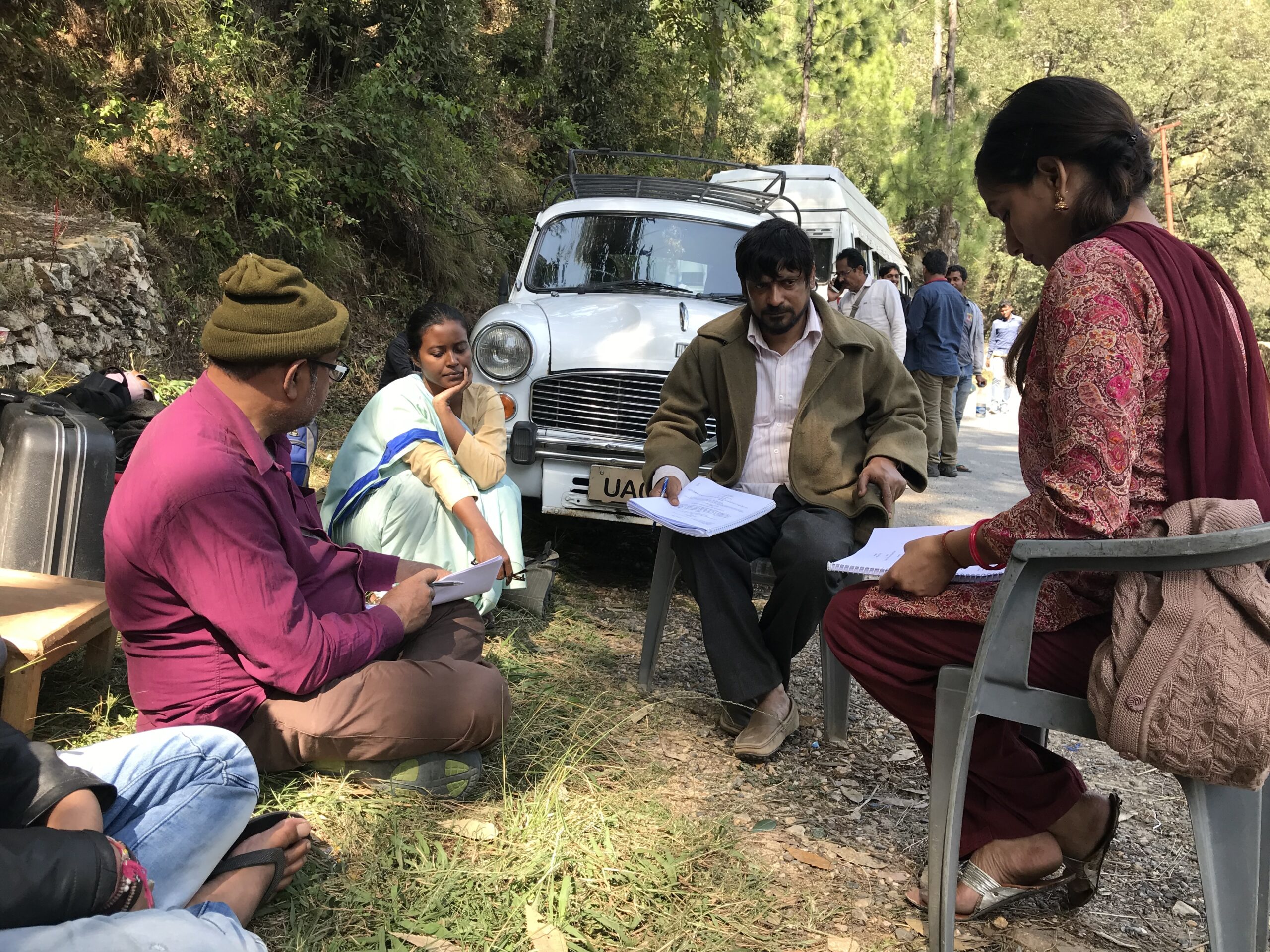
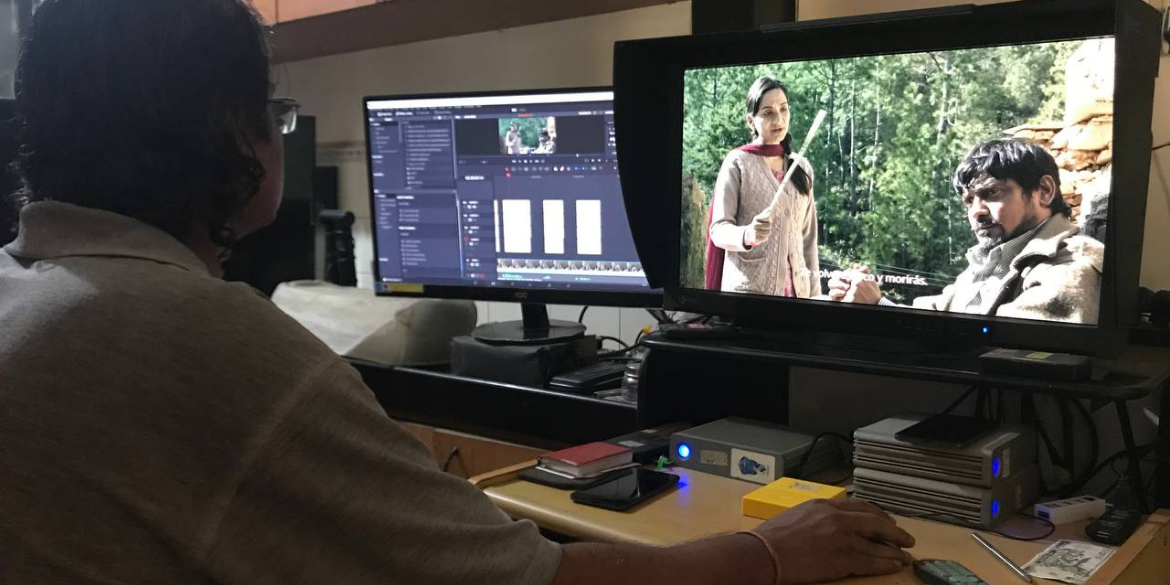
    It’s been more than two years since we started production on Josef – Born in Grace. It wasn’t the first film production I was involved in1, but it was the first professional one.

    During the lockdown, many filmmakers experimented with procedures to allow film production to continue during a pandemic. Malcolm & Marie was produced during the height of the pandemic, in a complete bubble. Drishyam 2 was produced during a break in filming of another film because the filmmakers couldn’t travel overseas. DOTS, which screened in the ICAF Indian Panorama with Josef – Born in Grace, is a computer screen film that was shot, filmed and edited remotely.

    Film production was an expensive and complicated thing when there isn’t a pandemic. Now that there is, the necessity of cast and crew safety, combined with the reality of releasing a movie without a theatrical run complicates production even further. Large studios have experimented with different release strategies from “in theatres only” for Tenet, ticketed within a paid subscription service for Mulan, and direct to streaming on their own paid subscription service platform, HBO Max, for no extra charge for everything from Warner Bros.

    Reading all of this made me think about the film we made, what I learned during the production process, and the kinds of films that we could make in the future.

    I joined the team late in preproduction. I had a job that prevented me from joining the crew as soon as the project began. My fiancée (now wife2), who was the costume designer on the film, pointed out that this was a chance that I wouldn’t get again, and it would be a great learning experience, if nothing else. I joined the team, and started immediately helping out with logistics. Being a novice, I had to learn quickly. Two years on, here’s what I can remember learning:

    Preproduction is critical to the success or failure of a project. Recces are important for getting a lay of the land and figuring out where to shoot, whom to contact for permissions, and who are the people who can get things.

    Not everything gets done or planned on the recce. Things are always fluid, and you’re always looking for ways to make the final film better. It took quite some time during production to find the locations that were finally used in the film.3 I’ve written about securing pivotal location in the film, the beautiful dak bangla, in another post.

    Don’t shoot during the festival season if you can help it. Really. Don’t. It’s easy to forget that a lot of the country takes festivals very seriously, and no one wants to work during one. Most people will try to work around it, but expect regular questions about whether they will be home in time for the festivities.

    Getting people to and from a location shoot is interesting and complicated. There are different modes of transport, number of people to be transported, and making sure that everyone is where they need to be when they need to be. The costs – time and money – can spiral quickly if you’re not careful.

    We shot in Ranikhet, and the way to get there was to find a way to Kathgodam (the closest railway station), and then catch a cab or a bus up the mountain. Since most of our crew were staying with us for the entire shoot, we had a few Tempo Travellers (also known as a minibus) to get us from Delhi to Ranikhet, and then shuttled us around from location to location. We still had a few cast and crew members who joined or left midway. Unless you have cars and drivers on standby for trips like this, hiring taxis is the way to do pickup and drop off runs. It took me too long to realise that a spreadsheet is invaluable in coordinating travel (hat tip to Vaidehi, once again).

    The Production Manager is pivotal in making sure that many of the things that we take for granted – food, travel, sundry purchases – are handled without inconveniencing the production. They’re the ones who get cursed out when something isn’t working like it should.4

    Finally, given the amount of expenses that making a film generates, it’s important to have a good relationship with a bank, especially one that’s local to where your production is. Nothing will grind things to a halt as quickly as waiting for a bank to make the arrangements for cash that’s vital to keeping the production ticking over. A trick that I learned is to open an account in the local bank. That way, there’s always a representative who can help sort out any issues arising from moving money between accounts, and ensuring that there’s enough cash in the branch for you to withdraw.


    1. That honour goes to Goodbye, Yesterday, a 48/5 film that some friends and I made for the East Lansing Film Festival. It was a lot of fun to make, but predictably terrible, and featured a character called Babs McGillicuddy. That last bit was a requirement. It was decidedly amateur and fueled mostly by adrenaline, almost no sleep, and a love of Entourage

    2. See her work on her website and instagram

    3. As an aside: the crew didn’t like having a day off while we figured all these locations out. We were pretty remote though, and I think that if this happened while we were closer to a major city with things to do during downtime, they wouldn’t have minded as much. 

    4. You learn, for example, that there is such a thing as too many potato-based meals. 

  • Securing the Dak Bangla

    Securing the Dak Bangla

    Josef – Born in Grace was the first film on which I worked in a professional capacity. So, fancy title notwithstanding, I was on the crew to pick up any slack that couldn’t be covered by anyone else. I approached this as an opportunity to learn about a job and industry that I only really knew about from TV shows and movies.

    Something I learned quickly was that my job involved a lot of “hurry up and wait.” The other thing that really stood out to me was just how much was up in the air when we began shooting. Vaidehi has a great story about the Josef’s signature coat, and the adventure of finding this signature piece of clothing after filming began. There were several roles which hadn’t been cast. And a few of the locations were also up in the air.

    We had scouted multiple abandoned buildings in Talla Ramgarh and even shot scenes in and around them, but nothing was quite working out on film the way Lulu Kaka1 or Sudheer2 wanted it to. This ruin is where Josef often finds himself, and is the silent partner in many of his monologues. It also needed to look like people could believe it was haunted. This ruin would be a character in the film.

    We found buildings that used to house refugees fleeing from oppression in Rajasthan, and we found dilapidated quarters that used to house government employees. Nothing looked like the kind of khandar3 – the ruin – that they wanted. Everything looked too clean, too solid. Nothing gave us the impression that it would crumble if you sneezed in it, but also that it would still be standing long after the world no longer had people in it. Eventually, we found a location that worked and when you see it on screen, you really can’t imagine any other location that would suffice.

    Like the khandar, Josef and Maularam’s kitchen and room was very important to the film. We couldn’t have a location that didn’t feel true to the characters. We had searched for locations without any luck during the recce and the first half of our schedule. Our local contacts brought us suggestions, but nothing clicked. Unlike the khandar, we wouldn’t have the opportunity to test the scenes set in the kitchen at multiple locations. It would have to be dressed by the art department, and look like somewhere that people had lived and worked in for at least twenty years.

    On a Friday, after we moved the crew from Ranikhet to Ramgarh, Lulu Kaka, Sudarshan4, Sudheer, and I took a day to search for a location that would work. It had to be something that looked the part, could be dressed quickly, and be suitable for interior and exterior shots. Most importantly, it had to be available.

    We had to find something that day or the shoot would be delayed. We were shooting in October, during the festival season, and our crew was asking us when we thought they would be able to return to their families every day5. No one wanted to spend the festival away from them.

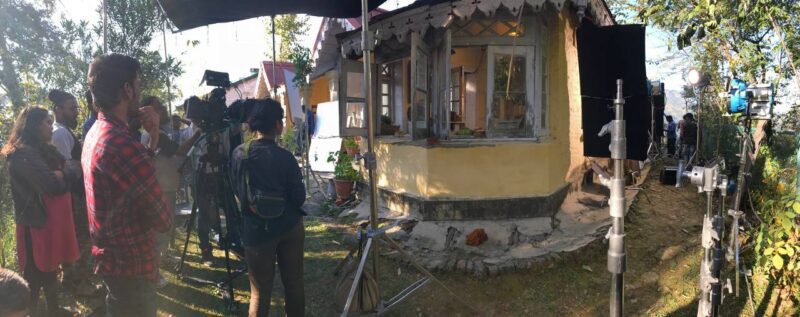
    We left immediately after an early breakfast, and looked at three or four locations. It was slow going6. Then, as we were nearing lunch, we found a house that seemed to check off all our requirements – a wonderful, old dak bangla. It looked like it had been there for ages7. It matched how Father O’Hara’s house looked. There were great indoor and outdoor areas for shooting, and we would only need to dress one of the rooms.

    This is where the importance of local contacts comes to the fore. The building was owned by the Uttarakhand Public Works Department, and the caretaker didn’t have a problem with use shooting there for a few days, as long as we got permission from the Executive Engineer. After making a few phone calls, we determined it would be possible to get permission. The only catch was that the Executive Engineer was the only person who could give us the necessary permissions and he was due to leave for Dehradun for ten days at 3 P.M.

    We rushed back to the hotel where we were staying, wrote up an official letter (and made a mental note that we needed a letterhead), and checked it twice. Then, I grabbed the first vehicle that we had available with a driver and I was off in a mad rush to reach the PWD office in Nainital before the officer left for the week.

    There’s really something to be said about speeding down a mountain road, trying to beat the clock. I wasn’t driving, and I’m really glad for the driver being incredibly good at his job. It still felt like we were driving through molasses. This was the opposite of time slowing down when adrenaline is coursing through your body. The hands on my watch seemed to spin as if they were turbocharged.

    I would look away for a minute, and the hands had moved fifteen minutes. There was no way we were going to make it. I would have to figure out how to get to Dehradun and back, and find the Executive Engineer, or the whole shoot would stop, we would blow our schedule, and no one would spend any time with their family for the holidays.

    We made it. Just barely. I arrived at the Executive Engineer’s office a few minutes before he was due to leave. After confirming a few of the details and reiterating that we couldn’t make any structural alterations to the building, he signed off on our request, and left for Dehradun. I sent a photo of the permission slip to the crew, and the driver and I went to finally eat some lunch.

    By the time we got back, the art department had started work transforming the set into what the film needed. Working around the clock, they had it ready to shoot in two days later.

    And that’s how we secured the location. This dak bangla on top of a mountain, built in the late 1800s is really a character in the film. And what a character it was even when we didn’t have it in the film yet.


    1. Susant Misra, our director. 

    2. Sudheer Palsane, our DOP. 

    3. The dictionary tells me that khandar translates to ruin. But I don’t know if that quite captures the essence of the word.  

    4. Sudarshan Juyal, who played Maularam in the film and was the Assistant Director. 

    5. The funny part about asking me was that I was as clueless about all of this as they were. I tried explaining this, but it fell on deaf ears. Or maybe they just needed someone to talk to about it.  

    6. And before you think that that sounds like a very slow search, remember: we were in the mountains, and distances can be deceptive. The person showing us the locations would point in a direction and say that it was just there. “Just there” is several kilometres away on winding mountain roads.  

    7. It looked like this because it really had been there for a very long time. It had been built by the British in the late 1800s. These days, it serves as a guest house for engineers on tour.