Category: Process

  • Photographs, Essays, and Fear

    Photographs, Essays, and Fear

    I think that I want to talk about fear today.

    I’ve been trying to write more, and share photographs, and every time I do, I feel a twinge of terror that whatever I’m going to write1 is terrible. I think that what I’m writing right now is terrible. My heart rate is through the roof, and I try to find any and all reasons to not write.

    "My fingers hurt."
    "My keyboard doesn’t work very well."
    "I have no idea what to write."
    "I’m a slow typist."

    And on and on. I feel this all the time. And it’s a problem because I want to write. I want to write a lot. I want to write essays. I want to tell stories. I want to make movies. But this fear – of speaking up, of being heard, of failing, – just won’t go away. And in the end, I don’t know if it matters.

    It’s the fear that keeps me collecting. Keeps me from focusing long enough to put down what I want to say2.

    None of this is good when I’m trying to write posts here, write short stories, or write accompanying blurbs with photos. Not to mention helping Vaidehi with her writing and marketing, and working on building a presence for UAKC. It’s all a lot.

    Anyway. I’m scared every time I sit down to write something. And I think that the only way to make the fear go away is just to do it more.


    1. I’m trying to write something to go along with every photo that I put out, and have a photo accompany every piece of writing.  

    2. Or dictate. I’ve been practicing dictation with the new iOS 15 update. It’s weird to hear myself speak out loud, but it’s getting better. The worst part seems to be holding a train of thought without giving into the urge to correct errors.  

  • A Jigsaw Puzzle: Distribution Options for Indie Films

    A Jigsaw Puzzle: Distribution Options for Indie Films

    As the pandemic stretches on, I’ve noticed friends and family seek out lighter fare on TV and streaming platforms. Friends, How I Met Your Mother, and the like.1 They’re bouncing off prestige2 shows faster than ever. No one wants to see hard narratives. Life is hard enough, and what people are looking for is escapism.

    I briefly mentioned in a previous post that every film faced distribution challenges during the pandemic. Everyone is trying to figure out how to make movies during the lockdown, and then, sell the movies to make enough money so that you can make the next one.

    In an article for Moneycontrol, Indian producers talk about how difficult the lockdown restrictions, even when they are eased, have made productions. Working hours are shorter (night shoots are next to impossible), and all the work needs to be done in a bio-bubble. Everyone working on the film needs to be paid their regular wages, no doubt about that, but it does mean that schedules will run longer if working days are shorter. Night shoots are practically impossible. Bio-bubbles being enforced mean that producers have to bear the cost of accommodation as well.3

    Denis Villeneuve has cast doubt on his Dune duology being completed if WB releases the first part directly to HBO Max. Emily Blunt mentioned in an interview that it’s unlikely that the sequel to Edge of Tomorrow would happen because the budget for a film like that would be too large. It would be unlikely to make its money back.

    Guaranteed blockbusters like Suryavanshi are being held back until theatres reopen. Others are heading straight to streaming services. WB and Disney are experimenting with different release strategies. Tenet was a theatrical release, while Mulan was released to Disney+ with for an additional fee before going free to all subscribers a few months later.

    Right now, Scarlett Johansson and Disney are in a legal suit based on how the release strategy for Black Widow has affected her compensation. Black Widow may have set box office records during the pandemic, but it’s looking to be one of the lowest grossing films in the Marvel Cinematic Universe.

    Streamed films do not generate box office returns and a lot of compensation and production budgets are dependent on them.

    So where does that leave indies?

    This was one of the major points being discussed during Marché du Film. How does independent film survive in an environment where audiences are seeking out comfort fare? Where theatrical releases are not always an option and digital distribution does not favour immediate returns?

    There are a few options available:

    • Waiting to release the film when theatres reopen,
    • Releasing it to streaming services, or
    • Self release and distribution.

    Waiting to release is an option that requires a lot of faith and a lot of money. Not that you have to have a lot of money, but that you have to be okay with having the money tied up with the film until you can release it to theatres. And you limit your options for new projects that you might not have the capital for. I’ll be honest – waiting that long is a terrifying prospect. You’re waiting for theatres to open, for audiences to be ready to tackle challenging cinema, and finally, hoping that the film you’ve created hasn’t missed its moment.

    Streaming services are the option that everyone suggests. Why don’t you release your film on Amazon Prime or Netflix, they ask. What they imagine is selling a film to a streaming platform for a large sum of money. The reality for a lot of indies is far more like putting your film up on YouTube and hoping that someone will watch it.

    Those are not the only options, of course. There are dedicated platforms for any kind of cinema that you can think of. The biggest name in Arthouse Cinema streaming is MUBI, and they run a very tightly curated selection of films.

    But getting a film onto a streaming service is not the easiest option, and brings an ever-present risk of piracy with it. A filmmaker I recently spoke with said that it didn’t matter that his film was available for ₹30 on a streaming platform or on YouTube. People were instead watching it on Telegram channels that were sharing a ripped version of the film.

    And you still have to market your film to any potential viewers – viewers who are spoiled for choice and currently seeking out comfortable content.4

    Speaking of doing your own marketing, there’s the third option: self release and pay-per-view distribution. This is a slow process – because this is where you have to do all the work. Like in the previous option, you have to cast a wide net, getting the attention of viewers around the world who might watch the film, then give them a way to easily watch it, and finally, figure out how to make them pay for the film. It can be a long, slow process.

    I’ve seen filmmakers do this. The one that sticks out in my mind is how Sandeep Mohan got his film Hola Venky in front of audiences. I watched the film at a co-working space where he projected the film from his laptop onto a wall and used the venue’s speakers for sound. At the end, he hosted a Q&A and asked that we contribute what we felt comfortable contributing.

    No matter which option you take, it’s nerve-wracking. It’s also really exciting. It feels like the start of a rollercoaster, where you’re slowly being pulled to the top before going into a dive, or looking at a jigsaw puzzle immediately after you’ve dumped it on a table to start assembling it.


    1. Over in our house, we’re binging Once Upon A Time, Critical Role, and finishing the last season of Madam Secretary

    2. A prestige show is one that’s supposed to be of a higher quality than regular TV. It’s usually a drama and runs on a premium cable channel. Shows like The Sopranos, Breaking Bad, Mad Men, and House of Cards

    3. Malcolm and Marie was filmed last year in a bubble. The first thing that we noticed when we saw how the bubble was maintained was that it would be very expensive for the producers to run a production like that. 

    4. And there’s nothing wrong with that at all. It just makes getting Arthouse films seen harder than it normally is.  

  • All Systems Go

    All Systems Go

    For the most part, I’ve got by so far is having systems. Systems for everything. It can get annoying for the people around me – not everyone thinks in systems. I like systems – we had a lot of them in school and I’ve tried to keep them around as I’ve grown older. They really helped me stay functional before I was diagnosed with ADHD. So let’s talk about some of them.

    Since I wrote about hoarding information, that sounds like a good place to start.

    Information Management

    In my previous post, I mentioned that I didn’t really have a working system for separating the information snacks, productivity porn, and anything useful that was input in my information diet. I’m trying to figure that one out, but right now, I don’t have much of one. Which isn’t to say that I’ve given up on it. On the contrary, I have a focus on what needs to be processed, and what’s junk.

    For collection, I’m using:

    • The Old Reader, and Reeder on iOS for RSS,
    • Raindrop.io for saving bookmarks,
    • Saved threads on Twitter, downloaded videos and playlists on YouTube, and a small list of podcasts that I’m subscribed to, and
    • Drafts for collecting random thoughts.

    I’m not doing much processing, but when I do:

    • Drafts and Zotero for longer thoughts, and notes

    And finally, for output, I use:

    • iA Writer for writing posts like this and anything longer,
    • Notion for working with Vaidehi on UAKC, and
    • Google Docs and Office 365 when we’re collaborating remotely with other people.

    I’m not building a Zettelkasten or anything like that. The thought of it appeals to me, but I have to get over the mental hurdle that everything in my backlog needs to be processed before I can produce anything1. I might get around to creating one, but it will be something I build as I work on things, not before.

    There are days when I feel like I’m like a dragon that hoards information candy2.

    Productivity

    I’ve fallen off the GTD wagon more times than I can think of. I’ve tried text files, email reminders, scheduled Telegram messages, spreadsheets, bullet journals, web based apps, and premium apps like OmniFocus. What can I say? I love making lists.

    What I struggle with is crossing things off lists.

    There’s an idea in my head that if I can just get everything into a perfect list, it will all be better, and I will be more productive and prolific. It’s bullshit, of course. By the time I’m done brain dumping and sorting things out, I’m too tired to do any of the things on my list. And if I rush in to just do it3? I’m simultaneously paralysed by all the options and terrified that I’m forgetting more important things.

    We’ve (Vaidehi and I) tried using a LOT of apps, especially since we work across Windows, iOS, Android, and the Internet. We’ve currently settled on a bulleted list inside a Google Doc. It’s not very high tech4, but it’s been the best fit for us.

    Time Management

    I’m time-blind. I rarely register time passing, and I certainly can’t estimate how long has passed while I’m working on something, or how long something should take. I occasionally brush my teeth while heating my coffee because I know that I’ve set that timer for 2 minutes. I’ve also taken hours to write and send an email because I didn’t think I spent a long time figuring out where the comma should be placed.5

    For a long time, I relied on my calendar – all appointments went on it. If something wasn’t on my calendar, I wouldn’t do it. But over the last year, we’ve been time-blocking a lot more. It’s a lot of work up front. We had to take a hard look at what was on our plates, and the kind of life that we wanted. Then we budgeted the time we had against everything that we wanted and needed to spend time on.

    It’s certainly not a system for everyone. Friends who’ve asked about it are speechless when they see our calendar and spreadsheets. But it works for us.6 And that’s all that matters.

    Finances

    YNAB has, without a doubt, been one of the biggest changes in my life. I tried to budget in the past. It never went anywhere. I had “new YNAB” for almost 2 years before it finally clicked.

    As soon as we got married, we created a joint budget. Then, we figured out what was important to both of us. We caught that I was engaging in collecting tendencies outside the internet as well. It’s helped to curtail some of that, and I can engage with my hobbies more proactively.

    We paid off my credit card. I carried debt for a while because I earned enough to pay it off. But I wasn’t disciplined with my card usage.

    Vaidehi even worked there for a season. It really helped us to get a lot more comfortable with using the service, and budgeting in general.

    We’re using it for company finances as well, but haven’t quite dialled that in. I’ll write more on that when we do. In the meantime, I’m going to be listening to Beginning Balance, the YNAB podcast about using YNAB to run your business.

    The secret ingredient

    Some of these things work for me now when they didn’t before for a simple reason – my wife is involved in them too. Things we struggled at doing individually became significantly easier when we were doing it together. We do what’s hard for the other person but easier for us. We keep each other accountable, so it’s not easy to say, “I’ll do that later” or stop doing things because it’s hard.7

    I mentioned at the start that this setup isn’t for everyone. I know this because that’s the answer we get after we show people our systems. These aren’t the only ones either – we have them for our home, health, and pretty much everything you can think of. It keeps us functional.

    1. This website, and what I write here, is pretty clear proof that I don’t need to do that to make something. I just need to make the thing.  
    2. I imagine myself like one of the dragons from Iguanamouth
    3. Hat-tip to Nike. 
    4. We’re trying out Notion, but very slowly. It’s a wonderful tool, until it’s not. You can read more about it on The Sweet Setup – especially the part about using it on the iPad. 
    5. Narrator: It was a very long time. 
    6. If nothing else, we go to sleep on time. Unless I lose track of time while watching an episode of Critical Role… 
    7. More realistically, because it’s more fun to watch Netflix than it is to make the bed.  
  • The Collectors Fallacy: How I Hoard Shit And Don’t Produce

    The Collectors Fallacy: How I Hoard Shit And Don’t Produce

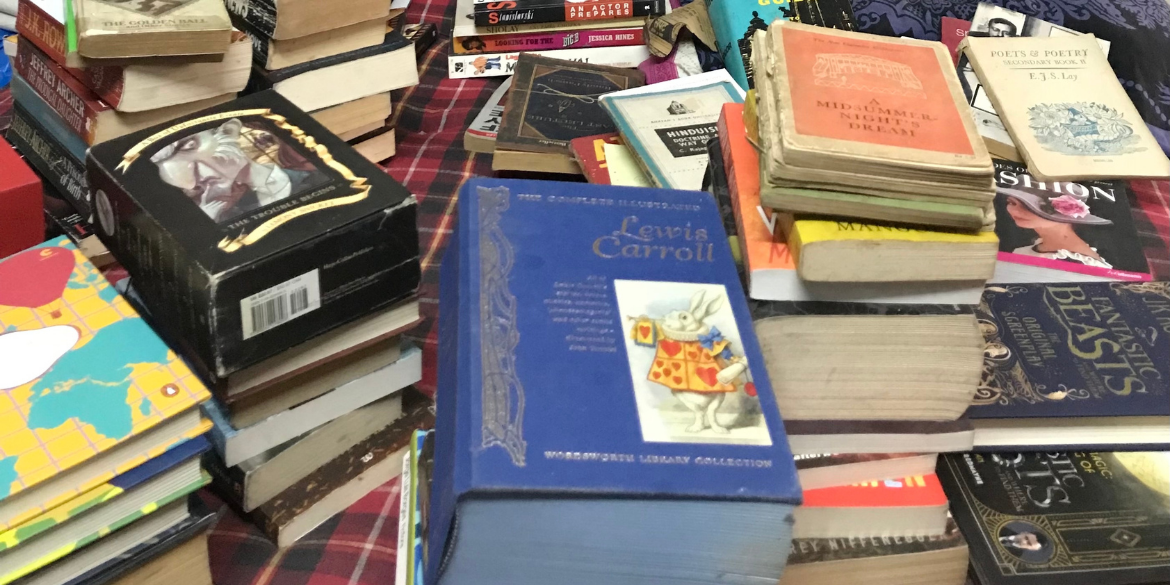
    I feel overwhelmed all the time. I know that a lot of people feel like that these days, so at least I’m not alone in this. I try to do a lot with UA Kathachitra and my personal life. And sometimes, I can fall into what some in the productivity porn1 circles call “the collector’s fallacy”. I came across this way back in 2015 (I think) on zettelkasten.de.

    Now, I know Zettelkasten are the rage these days. There’s Roam Research, Obsidian, Tinderbox, Devonthink, Drafts, Taio…to name just a few apps that I’ve seen. Not to mention Emacs, Orgmode, and all the wonderful tinkering that accompanies them2. All of them promise that you will be able to produce things faster and better. That you will become a creator.

    There’s just one problem: you still need to do the work. And be confident in the work that you are doing. Now, I have an ADHD fuelled brain that is sure that it will remember everything 3 combined with some perfectionist tendencies. So I want to hoard ALL THE INFORMATION.

    Let’s get a glimpse into how my collection (read: hoarding) problem works. It looks like this:

    • Hundreds of open tabs in multiple browsers4 (I’ve maxed out my phone’s maximum allowed on more than one occasion),
    • Nearly 4000 bookmarks in Raindrop.io (mostly unread, or read and unprocessed),
    • My RSS reader (The Old Reader & Reeder 4) regularly acting as a holding space for things I want to read,
    • Outside of Raindrop and Reeders, in several other places, I have saved to read/listen/watch:
      • tweets and twitter threads,
      • reddit post and comments,
      • YouTube videos, and
      • podcasts, and
    • A constantly growing backlog of media to explore between all the streaming services.

    You remember the list of apps I threw up before? I try to test ALL THE APPS. This drives a constant search for the next shiny object that will help me DO SOMETHING with all this input5. I’m pretty sure that I’ve paid a lot of money for apps and services for notetaking and productivity that I have never used.

    Really though, all of – the hoarding of information nuggets, the switching of apps, the quest for becoming more efficient – it’s procrastination. Procrastination driven by fear. Fear of forgetting. Fear of not knowing. Fear of getting it wrong when the work is out there. Fear of… who knows?

    The first thing that Christian and Sascha write is “Collectors don’t make progress.” That hit me hard. It hit me hard when I first read it, and it hits me hard today, when I’m writing it here. There are times when I don’t feel like I’ve made any progress on turning information into something that I can use for my entire life.

    Over the last few months, as Vaidehi and I have been finding better ways to work. We’ve been forced to. So, it’s time to simplify and let a lot of things go. I promise you, this isn’t because I’ve read Cal Newport’s new book (I haven’t, and I’m not adding it to the pile).

    But how do I simplify? And how did I cope this long? That’s for another post.


    1. Productivity porn (or food porn, home improvement porn, or travel porn) is like regular porn. You watch someone else do things instead of doing it yourself. I look at how other people do things efficiently and think about how to apply those tactics to my own life. But I don’t actually do that – because that is hard. It’s also hard to figure out if something is useful for me if I haven’t settled into a system. Spoiler: I never do. So it’s a hamster wheel of the next system, the next app, the new hotness. It’s exhausting

    2. The two reasons I haven’t fallen down the Emacs rabbit hole is that it isn’t available on iOS and it’s not good at working collaboratively. 

    3. Spoiler: it doesn’t. 

    4. I’m ashamed to say that there was a time when I lost my shit on a poor QA tester who borrowed my phone to test a webapp our company was working on. He cleared the cache as part of his process, and I went nuclear because I had lost a few hundred open tabs. The sad part is that I could reopen most of them from memory… 

    5. I vaguely considered writing tech reviews, but honestly, I don’t have the money, nor the energy to keep up with all the services that I want to explore. And if I did explore them, I would be dropping the ball on my life, and the company that we’re trying to build.zettelkastenzettelkasten method